GIANT4 IT Send a request
Mobile game development: a business owner plays a game on a smartphone in the evening

For brands, store chains and anyone looking for a new revenue stream

Mobile game development. A cash register that never closes for the night.

We build Unity games for iOS and Android with monetization built in from day one: rewarded ads, in-app purchases, subscriptions and promo codes for your store. A test launch first, big investment later.

The store is closed. Your customers are on their phones.

We develop custom mobile games for iOS and Android: a game as a standalone business or a branded game for your customers. How it will make money is decided before the first line of code.

Your core business earns while the warehouse is open and managers are available. Meanwhile your customers are on their phones: playing on the commute, in line, on the couch in the evening. Someone is already making money from that time — on ads, in-app purchases and subscriptions. Why not you?

We provide turnkey Unity mobile game development — from simple casual puzzles to 3D projects with levels and online mode. We design the game mechanics and economy, create the art, write the code, build in monetization and analytics, validate the game with a test launch (soft launch) and publish it on the App Store, Google Play and RuStore. The result is an extra revenue stream or a channel that brings customers back to your brand every day. We’re currently making our own mobile game on Unity, walking this path on our own project.

The revenue loop: how a mobile game makes money

Game loop

Log in → beat a level → get a reward → level up → come back tomorrow

Every successful mobile game runs on this loop: the player comes back every day. But the loop by itself earns nothing, so we build revenue streams into it from day one.

Revenue stream

Rewarded ads

The player chooses to watch a short video to double a reward. They’re happy, and the ad network pays you for the view. These ads don’t annoy: people tap them of their own free will.

Revenue stream

In-app purchases

Starter packs, hints, new levels, cosmetics. Not everyone pays, and that’s fine: we tune the balance so that buying is convenient, not mandatory.

Revenue stream

Subscription or season pass

A recurring payment for perks: no ads, double rewards, seasonal quests. It’s income that repeats every month rather than happening once.

Revenue stream

A bridge to your store

Beat a level — get a promo code for your store; scan a QR code from the packaging — get an in-game bonus. The game brings customers in for real purchases, and player data flows into your CRM.

One game loop. Four revenue streams. The register never closes for the night.

Design a game for my business

Four situations where a game turns the tables

19:00. The store is closed — and so is the register

The way it is nowAt seven in the evening managers go home and the warehouse closes. At night, on weekends and holidays the core business earns almost nothing, even though that’s exactly when customers are free and on their phones.

With Giant4 ITThe game runs around the clock and in every time zone: players watch rewarded ads and buy perks and subscriptions right in the game. Views and payments are counted automatically, and you see the game’s revenue in a report in the morning.

The store closes for the night — the core business stops earning

The way it is now

  • 19:00 · Store closed
  • Managers have gone home
  • Customers are on their phones

With Giant4 IT

Night report · Build the Garland

Minsk Moscow Almaty Dubai
Players now
1,284
Rewarded ads in 24 hours
3,920
In-game purchases
47 for $91

Store closed since 19:00Game running

Example with demo data

Bought once — and forgot your name

The way it is nowA customer bought a garland from you for New Year’s and disappeared. A year later they don’t remember the store’s name and go to whoever the ads show first. To win them back, you pay for ads again.

With Giant4 ITA branded game brings them back every day: a daily gift, a new level, a seasonal event. Completed levels earn a promo code for your store, and a QR code on the packaging gives an in-game bonus. A reason to remember you every day, without buying every contact all over again.

The way it is now

Customer · Anna K.

  • Purchase“Fringe” garland, December 24
  • Since thennot a single visit
  • To win backpay for ads again

Example with demo data

A customer plays the store’s branded mobile game

With Giant4 IT

Build the Garland · by the Ogonek store chain

Level 20 complete!

Your gift: promo code OGONEK-10 — 10% off in store

Go to store

Daily gift: day 34

Scan the QR from the packaging — +500 sparks

Example with demo data

A big budget, spent blind

The way it is nowA game takes a year to make, launches worldwide at once with heavy ad spend — and only then does it turn out that players leave after the first level. The development and ad money is already spent.

With Giant4 ITFirst, a playable prototype: you play the mechanic on your phone yourself before paying for art. Then a test launch (soft launch) in one or two small markets: how many players come back, how much each player brings in and what they cost to acquire. You decide on big ad spend based on numbers, not guesswork.

The way it is now

  1. A year of development
  2. Worldwide release at once
  3. Ad budget spent
  4. Players leave after the first level
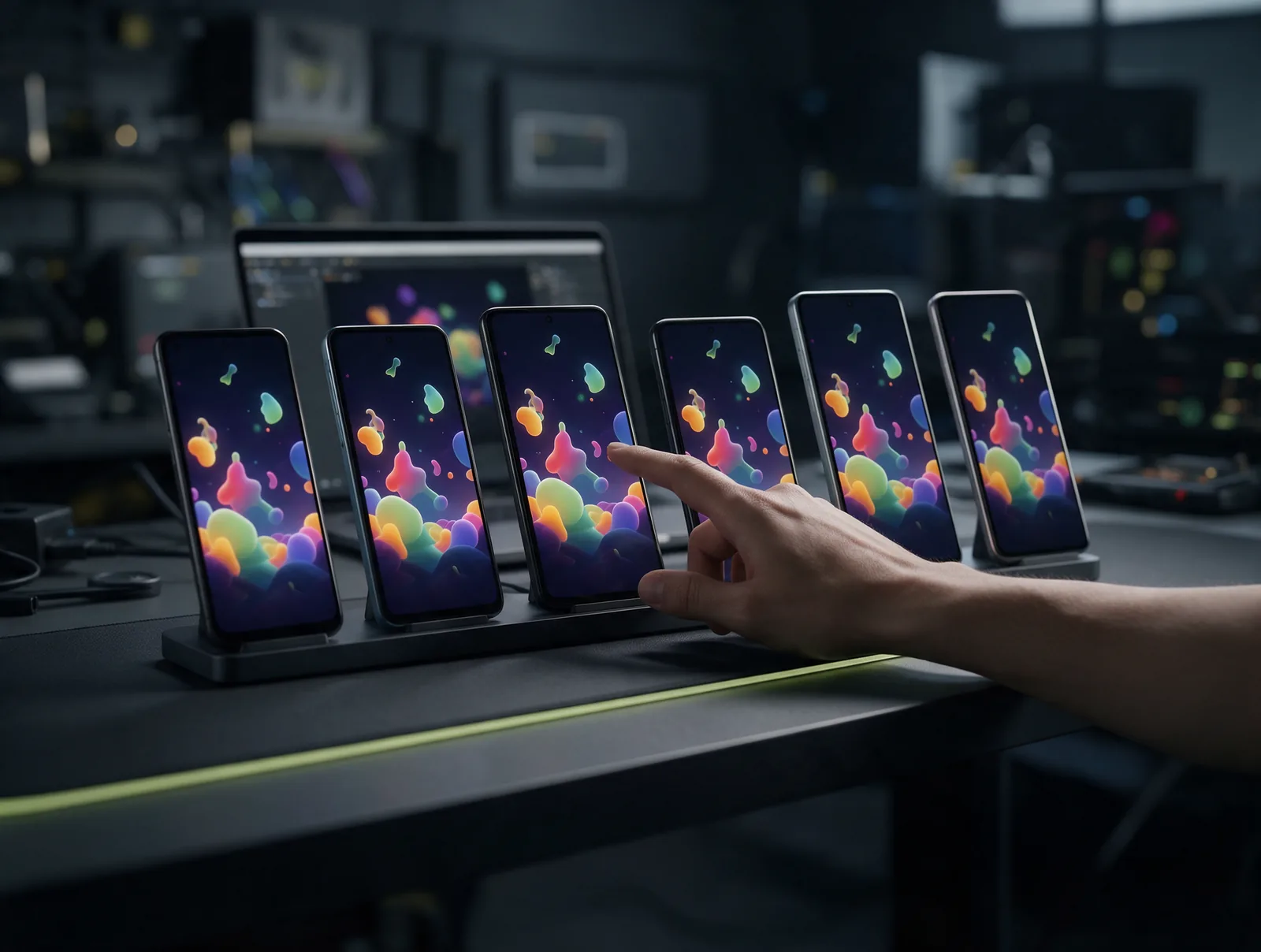
Mobile game test launch: checking on different smartphones

With Giant4 IT

Test launch · Build the GarlandKazakhstan and Belarus · 14 days

Day 2 retention
38%
Day 7 retention
14%

Revenue per player, 30-day forecast$0.45

Cost per player acquired$0.30

Players pay off → scaling ads

Example with demo data

Released — and forgotten

The way it is nowA month after release there are no new levels; players have finished everything and left. A new Android version comes out — the game crashes, the rating drops to 3.1, and the contractor doesn’t answer and has the source code.

With Giant4 ITWe take the game on for ongoing development under contract: new levels and seasonal events, updates for new iOS and Android versions, analysis of the level where players quit. The Unity project, source code and store accounts are yours.

The way it is now

3.1

Last update: 11 months ago

“Crashes after the Android update”

The contractor isn’t answering, and he has the source code.

Example with demo data

Developers update the levels of a Unity mobile game

With Giant4 IT

Game lifecycleRating 3.1 → 4.6

  • Week 1: +20 levels
  • Dec 20 – Jan 10: “New Year Garland” event
  • Update for the new Android version: published

Level 14: players quit

31%after difficulty tuning12%

Example with demo data

What your own mobile game gives your business

  • A new revenue stream alongside your core business
  • Ads, purchases and subscriptions from day one
  • The game earns at night, on weekends and in other time zones
  • Customers remember your brand every day
  • In-game promo codes bring people to your store
  • A test launch before big ad spend
  • One build for iOS and Android
  • Decisions based on numbers: retention and revenue per player
  • The Unity project and source code are yours

What turnkey mobile game development includes

From the idea and game economy to app store publishing and growth after release. You can order a mobile game even without a technical specification: we’ll take care of the mechanics, prototype and estimate.

  • Concept and game economy

    Genre, player, core game loop and what the player will pay for. All of it goes into the game design document and the estimate before development starts.

  • Playable prototype

    A simple version of the core mechanic that you play on your own phone. We check that the game is engaging before investing in art.

  • 2D or 3D art and animation

    Characters, levels, interface and effects. The style fits your audience or your brand.

  • Unity development for Android and iOS

    One project, two platforms; we optimize the game to run smoothly even on budget phones. Online mode, leaderboards and cloud saves — if the game needs them.

  • Monetization from day one

    Rewarded ads, in-app purchases, a subscription or season pass. We tune the balance so players pay and don’t leave because of intrusive ads.

  • Analytics and test launch

    We measure how many players come back, at which level they quit and how much each player brings in. Before a big release, we always launch the game in a small market first.

  • Publishing on the App Store, Google Play and RuStore

    Store page, screenshots, video and descriptions in the languages you need, and passing store review. Accounts are registered to your company.

  • Business integration and growth

    Promo codes from the game for your store, a bonus for the QR code on the packaging, player data in your CRM. After release: new levels, events and updates under contract.

Who a mobile game is for: your own product or a branded game

Mobile games come in two kinds. The first is a standalone digital product: the game earns on its own from ads, purchases and subscriptions, as an extra business alongside your core one. The second is a branded game: it reminds customers about you every day and brings them to your store with a promo code.

In both cases we treat the game as a business: what a player costs, why they come back and how they pay off. Gamification for business works when the game is tied to sales instead of living on its own.

  • Entrepreneurs looking for a new revenue stream: a game as a standalone digital product with ads, purchases and subscriptions.
  • Store chains, cafés and consumer brands: the game brings customers back every day and sends them to buy with a promo code.
  • Online stores and marketplace sellers who need their own channel for customer attention, not just paid ads.
  • Manufacturers and distributors: a game for dealers and sales staff to learn the product range and compete for bonuses.
  • Those who only have an idea so far: you can order a mobile game without a technical specification — we’ll take care of the mechanics, prototype and estimate.

How Unity game development works: from idea to release

  1. Idea and economyWe discuss the goal (revenue or customer loyalty), genre, audience and how the game will make money. We draw up the estimate and timeline and fix the price in the contract.
  2. Mechanic prototypeWe build a simple playable version. You play it yourself and decide whether to go further — before paying for art and levels.
  3. Art and developmentWe draw the world and interface and program the levels, monetization and analytics. Every week we send a fresh build to your phone.
  4. Test launch (soft launch)We release the game in one or two small markets. We see how many players come back and how much each player brings in, and tune the difficulty and balance.
  5. PublishingWe prepare the store page, screenshots and video, publish on the App Store, Google Play and RuStore and get through store review.
  6. Updates and growthNew levels and seasonal events, updates for new iOS and Android versions, fixes — under a support contract.
Unity mobile game development: a developer tests the game on a smartphone

What we are already doing ourselves

We are currently developing a mobile game on Unity ourselves: we’re walking the path from prototype to app store on our own project. The Giant4 group sells lighting through its own online stores, giant4.ru and giant4.ae, and on Wildberries and Ozon, so we measure any new channel in money: what a customer costs and why they come back.

And the integrations that will connect the game to your sales already run in our business:

  • our own CRM, which the whole group of companies works in every day;
  • a 1C-Bitrix online store with 1C sync — stock updates automatically;
  • an AI assistant that recommends products and takes orders right in the chat, including by voice.

Why Giant4 IT: we treat the game as a business

  • We are entrepreneurs ourselvesGiant4 IT isn’t just a mobile game development studio but part of the Giant4 group of companies: lighting, our own online stores giant4.ru and giant4.ae, sales on Wildberries and Ozon. We treat a game as a sales channel: what a player costs and how they pay off.
  • We’re making our own Unity gameOur own Unity mobile game is currently in development. We’re walking the path from idea to app store on our own project.
  • We connect the game to salesWe run our own CRM, a 1C-Bitrix online store with 1C sync and an AI assistant. We wire promo codes and bonuses from the game into your store and CRM.
  • Fixed price. The game is yours.“From $5,600” excl. VAT is a guide price for a simple game. We fix the exact price in the contract and hand the Unity project and source code over to you. International clients are invoiced by Giant4 FZ-LLC (UAE).

Giant4 IT is a studio within the Giant4 group. In IT since 2022.

How much mobile game development costs

from $5,600

Design a game for my business

The price depends on the genre and scope of the game: how many mechanics and levels, 2D or 3D art, whether an online mode and server are needed, what monetization and analytics, integration with your store and CRM, how many languages. The guideline for a casual game with levels and progression is $17,000–44,000.

Prices exclude VAT. We confirm the exact cost and timeline after a short call and fix them in the contract.

For Russia and the CIS we invoice in rubles; international clients are invoiced by Giant4 FZ-LLC (UAE).

Frequently asked questions

How much does it cost to make a mobile game?

Mobile game development starts at $5,600 excl. VAT for a simple casual game with one core mechanic. For a casual game with levels, progression and monetization, the guideline is $17,000–44,000. The total depends on the art, number of levels, online mode and integration with your business; we name the exact price after a short call and fix it in the contract.

How long does it take to make a mobile game?

It depends on the genre, art and number of levels, so we set the dates for each stage in the estimate and write them into the contract. First we build a prototype of the core mechanic, then the art and levels, then the test launch. You get a fresh build on your phone every week and see the progress yourself.

How does a mobile game make money?

Through ads (rewarded and between levels), in-app purchases and a subscription or season pass, and a branded game also through promo codes and repeat purchases in your store. We plan mobile game monetization at the concept stage and choose ad networks and payment methods for the market: for Russia, those that work there; for other countries, their own. Nobody can say in advance how much a game will earn, so we run a test launch before the big release.

What is a mobile game soft launch and why do you need it?

It’s a test launch in one or two small markets before the big release. We look at how many players come back the next day and after a week, at which level they quit, how much each player brings in and what it costs to acquire them. Based on these numbers we refine the game and decide whether to invest in wider advertising. In our process this stage is mandatory.

Why Unity, and will the game be on Android and iOS?

Unity is one of the most widely used engines for mobile games: it handles 2D and 3D, simple puzzles and online projects alike. Unity game development is also cost-effective because one project builds for both Android and iOS — you don’t pay for two developments. We publish on the App Store, Google Play and RuStore.

Why does a business need a branded mobile game?

So customers think of you every day, not once a year when they see an ad. Daily gifts, levels and seasonal events bring players back, progress earns them a promo code for your store, and a QR code on the packaging gives an in-game bonus. This kind of gamification for business suits store chains, cafés, consumer brands and online stores.

Who owns the game and the source code?

You do. We hand over the Unity project, source code and art under the contract, and register the App Store, Google Play and RuStore accounts to your company. After release we can take the game on for ongoing development: new levels, events and updates for new phone OS versions.


Ready to switch
to the new way?

Ask the AI assistant — by text or by voice. It answers right away, and when you’re ready it hands the conversation to a manager. The consultation is free.

An experienced team at Giant4 IT studio. Working since 2022.

Giant4 IT AI assistantonline

Replies come from AI. By sending a message, you accept the privacy policy.